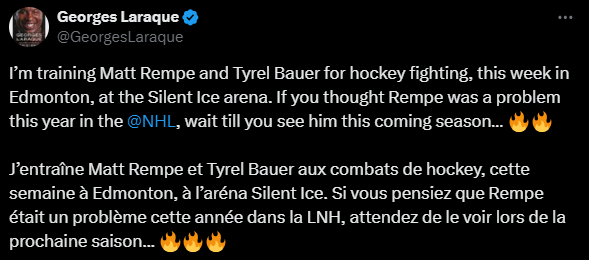
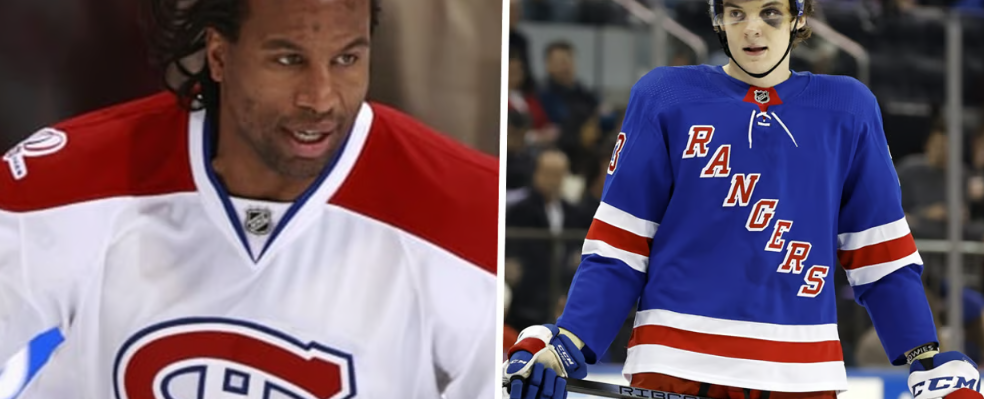
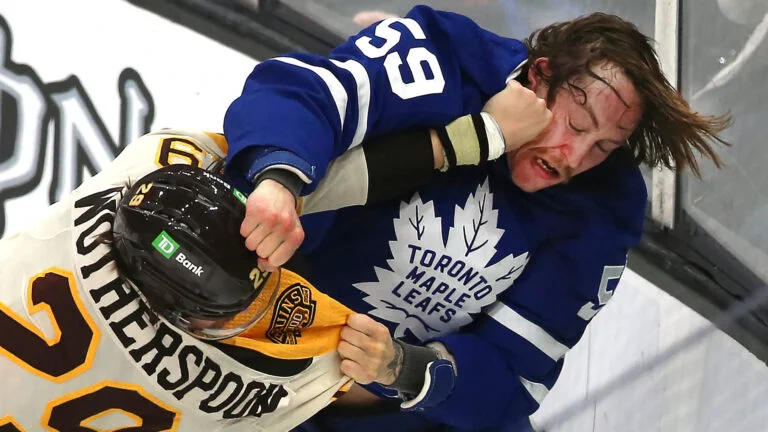
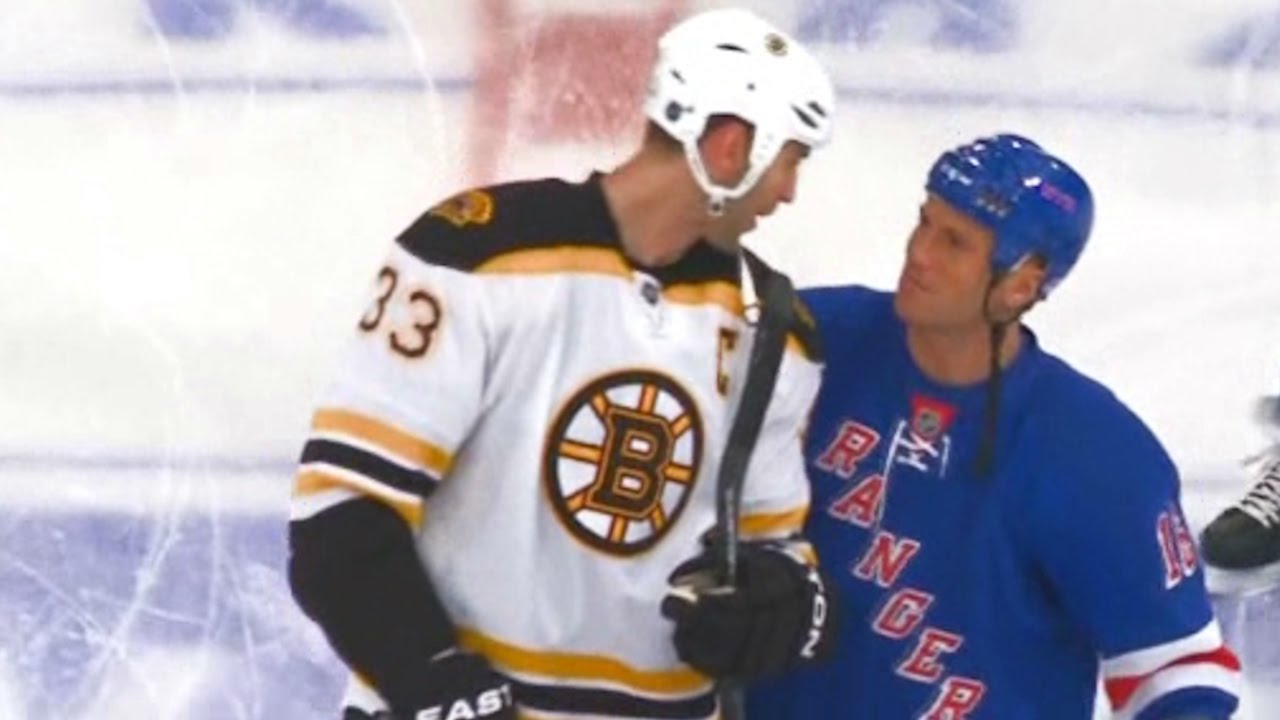
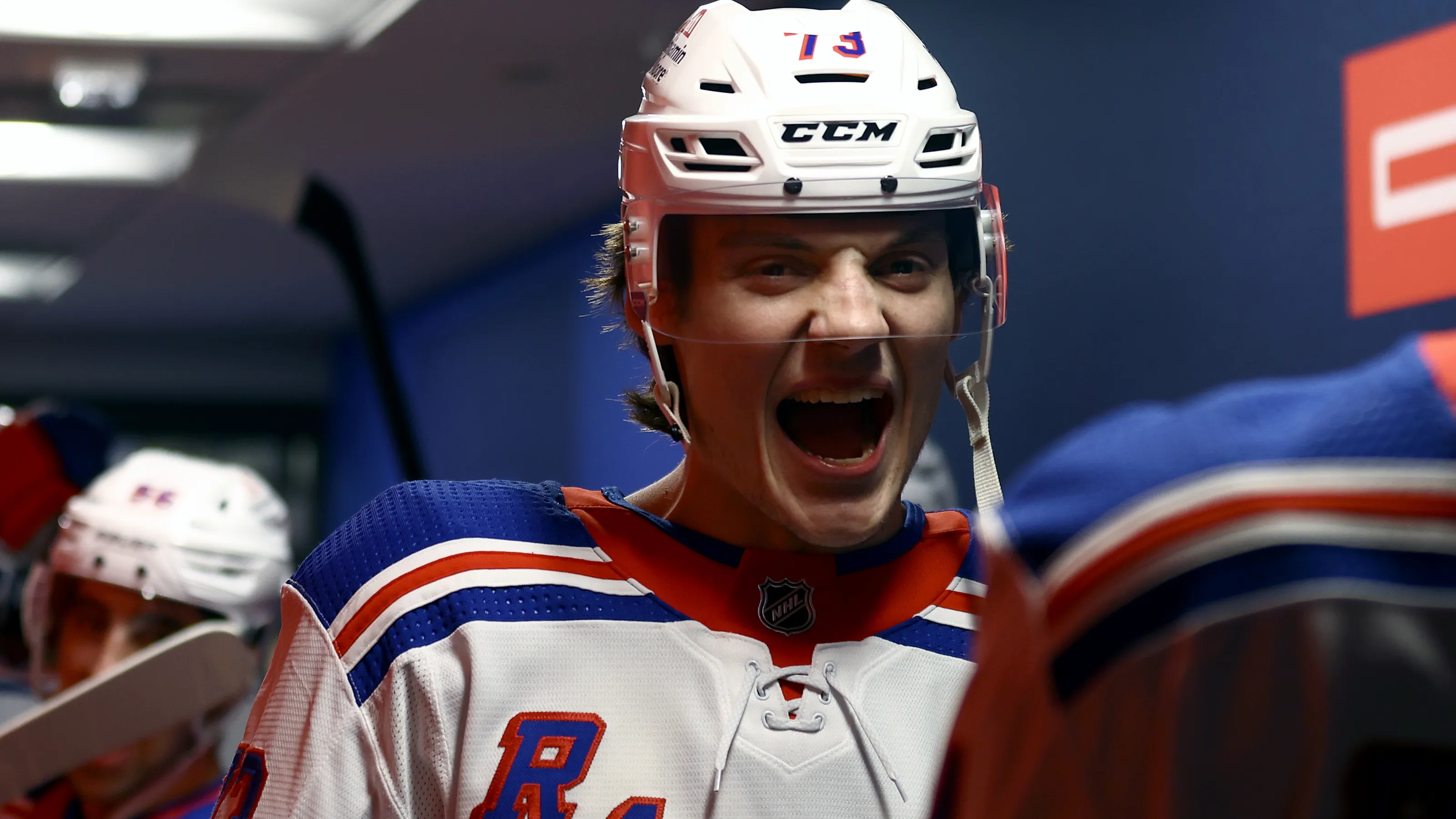
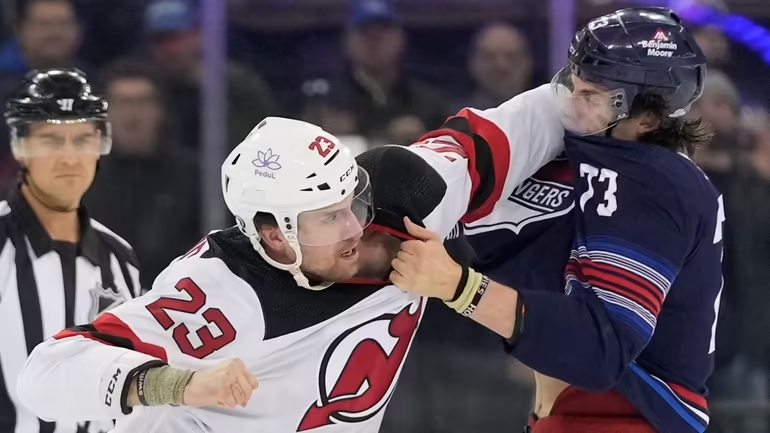
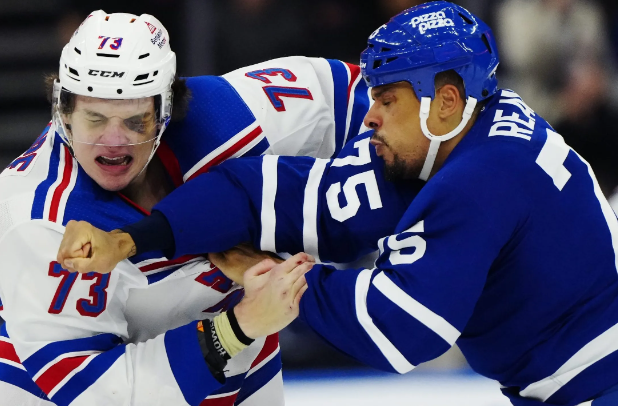
If you’ve spent any time on Reddit or hockey Twitter lately, you’ve probably seen the question pop up: are enforcers still a thing in hockey? It’s usually asked by someone who just watched Matt Rempe try to dismantle a human being, or maybe someone who tuned out around 2011 and is just getting back into the sport. The short answer is yes. The long answer is yes, but they don’t look like Bob Probert anymore.
The game has changed, the rules have tightened, and the days of the three-minute-per-night heavyweight are over. But if you think the enforcer is extinct, you haven’t been paying attention to the 2025-26 season.
Drop the Gloves
The Extinction of the One-Dimensional Goon
Let’s get one thing straight. The traditional enforcer – the guy who played four minutes a night, couldn’t skate backward, and only existed to punch someone in the snot box – is dead. Gone. Finished.
The salary cap killed him. When every dollar matters, a general manager can’t waste a roster spot on a player who is a liability the second the puck drops. Back in the pre-cap days, teams could afford to carry a guy whose only job was to sit on the bench and wait for someone to take a run at the star center. That math doesn’t work anymore. Every roster spot has to justify its existence, and “I punch good” stopped being enough around 2012.
Rule changes didn’t help either. Don’t get me started.
The instigator rule, the helmet-off penalty, the visor mandate – they all conspired to make fighting more costly and more dangerous at the same time. And then there’s the CTE awareness. The tragic deaths of Derek Boogaard, Rick Rypien, and Wade Belak in the summer of 2011 forced a reckoning that the hockey world couldn’t ignore. Three enforcers dead in four months. The league realized the human cost of the heavyweight lifestyle, and teams stopped drafting pure fighters. Parents stopped pushing their kids into the role. The pipeline dried up.
We wrote about this shift back in 2022 when we talked about the future of the hockey enforcer. At the time, we weren’t sure what was coming next. Turns out, the answer was staring us in the face.
The Modern Enforcer: Skill Meets Fist
Fighting isn’t dead. It just grew up. That means the modern enforcer is a multi-tool player. He has to be able to skate, forecheck, kill penalties, and – this is the part the old guard hates hearing – actually contribute to the scoresheet. You can’t just be a pair of fists anymore. You’ve got to be a hockey player who also happens to be willing to drop the gloves when the moment calls for it.
Take Mark Kastelic. The Bruins forward is the co-leader in NHL fights this season with 10 tilts. But he also put up 12 goals and 10 assists while playing all 82 games. That’s not a goon stat line. That’s a legitimate fourth-line center who can also rearrange your face. His best scrap of the year? A 7.46-rated war with Mathieu Olivier on March 29th. Fuckin’ beauty.
Or look at Montreal’s Arber Xhekaj. “Wifi” is a legitimate defenseman who logs real minutes, plays on the penalty kill, and moves the puck. He also happens to be a terrifying human being who had 8 fights this season, including a heavyweight clash with Rempe that shook the Bell Centre. We’ve been tracking the Rempire State Building since his debut, and Wifi is one of the few guys who can go toe-to-toe with him.
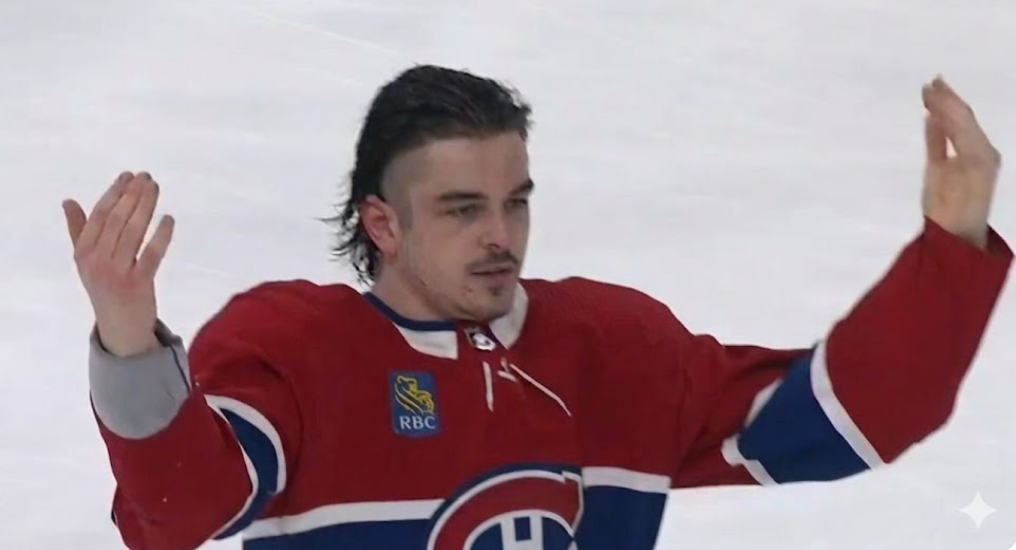
Even the closest thing we have to a traditional heavyweight – Mathieu Olivier of Columbus – plays a regular shift. He tied for fourth in the league with 9 fights, including an absolute war with Ryan Reaves on January 6th that HockeyFights.com rated an 8.59. That was the highest-rated fight of the entire 2025-26 season. These guys aren’t just taking up space on the bench. They’re earning their paychecks.
Curtis Douglas of Tampa Bay tied Kastelic for the fight lead with 10 bouts. At 6’9″, he’s the closest thing to a Boogaard-sized human the league has seen in years. But even Douglas had to prove he could play a regular shift before Jon Cooper would put him on the ice.
The 2025-26 Fight Landscape
If you think hockey fights are gone, the numbers tell a different story.
According to HockeyFights.com, there were 281 total fights across the 32 NHL teams during the 2025-26 regular season. That’s not 1987 numbers – back then you were looking at 0.85 fights per game – but it’s a hell of a lot more than zero. And the fight quality has been outstanding.
Here’s what the top of the fight card looked like this year:
| Player | Team | Fights |
|---|---|---|
| Mark Kastelic | Boston Bruins | 10 |
| Curtis Douglas | Tampa Bay / Vancouver | 10 |
| Ross Johnston | Anaheim Ducks | 9 |
| Mathieu Olivier | Columbus Blue Jackets | 9 |
| Sam Carrick | NYR / TBL / BUF | 9 |
| Arber Xhekaj | Montreal Canadiens | 8 |
| Tanner Jeannot | Boston Bruins | 8 |
| Brandon Duhaime | Washington Capitals | 8 |
The Tampa Bay Lightning led the league with 44 fights. They also went 50-26 and made the playoffs. In fact, six of the top seven fighting teams this season clinched playoff spots. There’s a correlation there, even if the analytics nerds don’t want to admit it. A team that’s willing to bleed for each other tends to be a team that’s hard to play against. I’m not saying fighting wins you the Cup. I’m saying it’s not the liability the “ban fighting” crowd wants you to believe it is.
And the goalie fights. My god, the goalie fights.
Three separate goalie brawls in one season. Jeremy Swayman vs. Andrei Vasilevskiy on February 1st. Alex Nedeljkovic vs. Sergei Bobrovsky on January 19th. Jacob Markstrom vs. Igor Shesterkin on March 31st. That’s more goalie fights than we’ve seen in the previous five seasons combined. Something’s in the water, and I love it.
The Bruins: Still Dropping the Mitts
And what about our beloved Boston Bruins?
They finished second in the entire NHL with 33 fights. Kastelic led the way with his 10, but Tanner Jeannot chipped in 8 of his own – including a 7.91-rated barn-burner against Nicolas Deslauriers in Philly on February 28th. Even Swayman got in on the action with that Vasilevskiy tilt. Film at eleven.
We broke down the Bruins’ full 2026 fight card last month, and the fourth line was the heart and soul of this team all year. Kastelic, Jeannot, and the rest of the bottom six brought an edge that the top lines couldn’t always match.
The B’s might have pissed away a 100-point season in the playoffs, but you can’t say they lacked pushback. When the chips were down, they answered the bell. That counts for something. Maybe not enough, but something.
FAQ: The Enforcer Question
Are enforcers still a thing in hockey?
Yes, but the role has changed. The one-dimensional goon who played four minutes a night is gone. Modern enforcers like Mark Kastelic and Arber Xhekaj are legitimate hockey players who contribute goals, assists, and penalty kill minutes while still leading the league in fighting majors. The 2025-26 season had 281 fights across 32 teams – the enforcer adapted, he didn’t disappear.
Who are the best fighters in the NHL right now?
Mark Kastelic and Curtis Douglas led the 2025-26 season with 10 fights each. Mathieu Olivier, Ross Johnston, and Sam Carrick each had 9. Arber Xhekaj and Tanner Jeannot finished with 8 apiece. Olivier’s January 6th bout with Ryan Reaves earned the highest fan rating of the season at 8.59 on HockeyFights.com.
Why did traditional enforcers disappear from the NHL?
Three things killed the old-school enforcer. The 2005 salary cap made it impossible to justify a roster spot for a player who couldn’t skate. Rule changes like the instigator penalty and helmet-off rule added costs to every fight. And the deaths of Derek Boogaard, Rick Rypien, and Wade Belak in 2011 forced the league to confront the human toll of the heavyweight lifestyle. The pipeline dried up after that.
Does fighting actually help teams win?
The numbers are interesting. In 2025-26, six of the top seven teams in fighting majors made the playoffs. Tampa Bay led the league with 44 fights and went 50-26. Boston was second with 33 fights and hit 100 points. That’s not proof that fighting wins championships, but it suggests that teams willing to play a physical, accountable brand of hockey tend to be competitive. The Carolina Hurricanes and Colorado Avalanche ranked near the bottom in fights and were Cup favorites, so it cuts both ways.
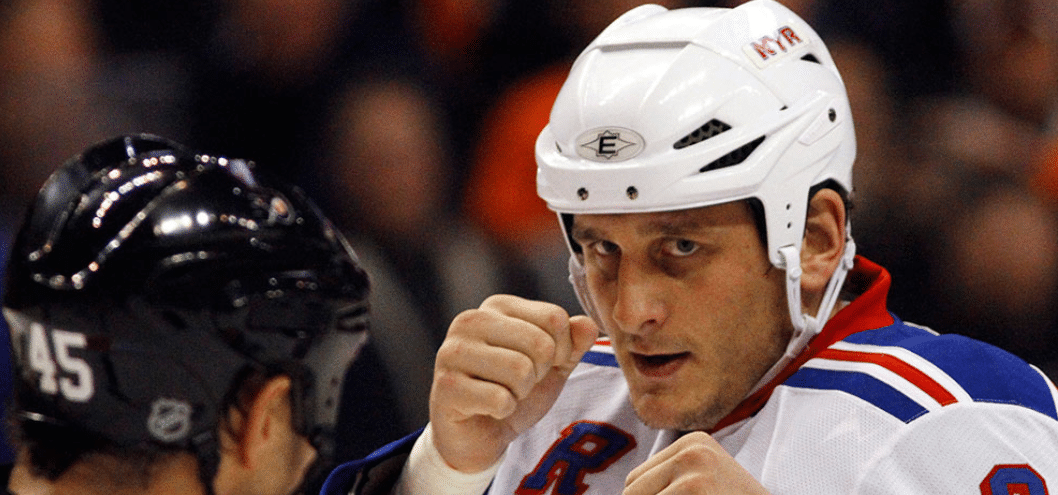
So – the enforcer isn’t dead. Thank Christ. He just learned how to skate.
And as long as there are cheap shots… and momentum swings… and guys running your goalie – there will be a place for the player willing to drop the mitts and answer the bell.
Just don’t expect him to be sitting on the bench for 55 minutes a night anymore. That version of the job is gone. But the spirit of it? That’s still very much alive in the NHL.